
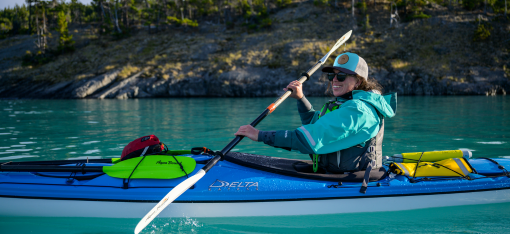
Paddling in Grand Teton National Park
9-minute read • by Sharon Brodin
The crystal-clear alpine lakes of Grand Teton National Park are begging to be paddled, and not just photographed! Located in northwest Wyoming—directly south of Yellowstone National Park and north of the town of Jackson—Grand Teton hosts several lakes with some of the most dramatic mountain backdrops in North America.

Kayakers on String Lake in Grand Teton National Park
Quiet morning SUP sessions. Multi-lake kayak tours. Ultra-light backcountry packrafting. All are possible here while you get an unforgettable front-row seat to the Teton Range.
This comprehensive guide covers which lakes are suitable for which type of paddling, essential logistics, launch spots and safety tips for your next mountain paddling adventure.
My family and I have taken two family road trips to this park so far. We’re reminded each time of its incredible beauty, ruggedness and opportunity for outdoor adventure.
Most of the park’s visitors, though, seem to flood the campgrounds, overlooks and closest hiking trails (as is common in all our national parks). Relatively few take advantage of the great paddling offered on the park’s scenic lakes and the Snake River that winds its way down the flats.
Where are the Best Places to Paddle in Grand Teton National Park?
Of the more than 100 lakes in the Park, ten are available for boating. Of those ten only two allow motorized boats. That’s great news for those of us who love the quiet!You’ll be rewarded with amazing views of the surrounding mountains and canyons as you paddle across these pristine lakes. The famous peaks of Grand Teton and Mount Moran are easily seen from most of these lakes.
Here's a breakdown of the full map of the Park to highlight the lakes open to kayaking, canoeing and paddleboarding:
1. Jackson Lake (North Park)
-
Overview—At 25,540 acres, Jackson Lake is by far the largest body of water in the park. It offers vast open waters, islands exploration and panoramic views of Mount Moran.
-
Best For—Sea kayakers and experienced canoeists and packrafters who are comfortable with open-water navigation. You can rent a canoe or kayak or bring your own boat.
- Pro Tip—Due to its massive size, Jackson Lake can build up serious wind and chop. On windy days, stick to sheltered areas like Colter Bay or Half Moon Bay.
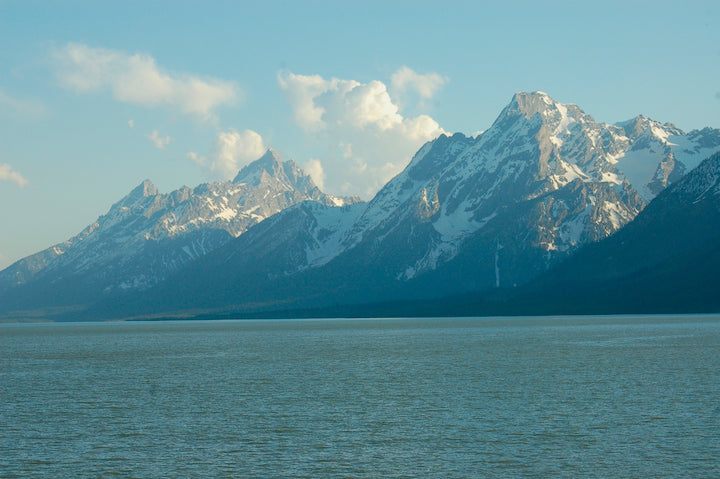
Jackson Lake with the Teton Range on its western shore
Jackson Lake is the only lake in the park that allows sailing, windsurfing and water skiing. If you have your own boat, you’ll have much more freedom to choose access points and time of day.
The earlier in the morning you can get out, the more likely you are to find calm water. And the fewer of the faster, bigger watercraft you'll have to watch out for.
We’ve been at Jackson Lake when the entire lake was dead calm for days in a row. But as I already mentioned, it can also be very windy with large waves. That, combined with the bone-chilling water temps, calls for extra caution. Tragically, people have died paddling this lake as recently as 2024.

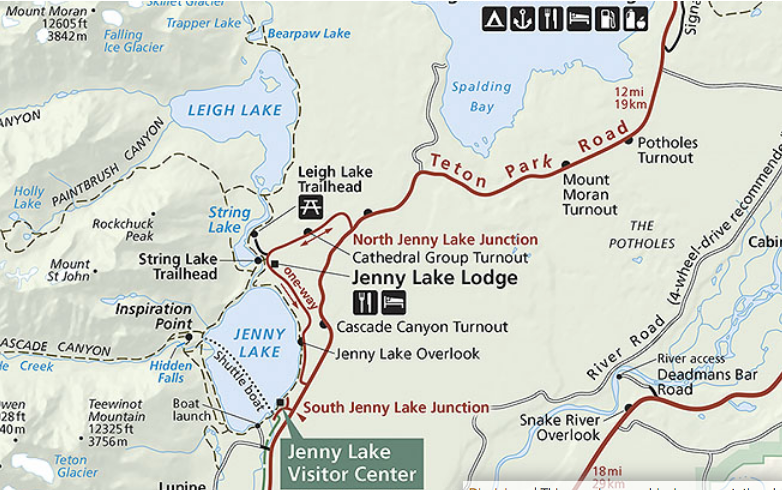
2. Jenny, String and Leigh Lakes (Central Chain)
-
Overview—These popular lakes sit right at the base of the Teton Range’s grandest peaks, making them incredibly scenic!
- Best For—Being immersed in the park's grand peaks.
-
Jenny Lake—Hugely popular and easily accessible, Jenny Lake is also the gateway to the Cascade Canyon hiking trail with its stunning overlook, Inspiration Point. You can rent a canoe or kayak there, or bring your own boat to the launch on the south end.
-
String Lake—Shallow, often calm and “warmer” than most (as warm as a glacier-fed alpine lake can be!), makes it ideal for paddleboarding and beginning paddlers. You’ll need your own boat.
-
Leigh Lake—Reachable by an easy 100-yard portage from String Lake. Leigh Lake will give you a quieter experience away from most park visitors. There are backcountry paddle-in campsites if you’d like an overnight adventure.
- Bearpaw Lake—Want to tackle the full chain? Add tiny and tranquil Bearpaw to your excursion. It’s just a short portage from the north end of Leigh.
NOTE: Rental canoes and kayaks from Jenny Lake have to stay on Jenny. So if you want to explore the entire chain, you’ll need your own boat.
This area is extremely popular, so to ensure a parking spot close to your launch site, arrive as early in the day as you can.
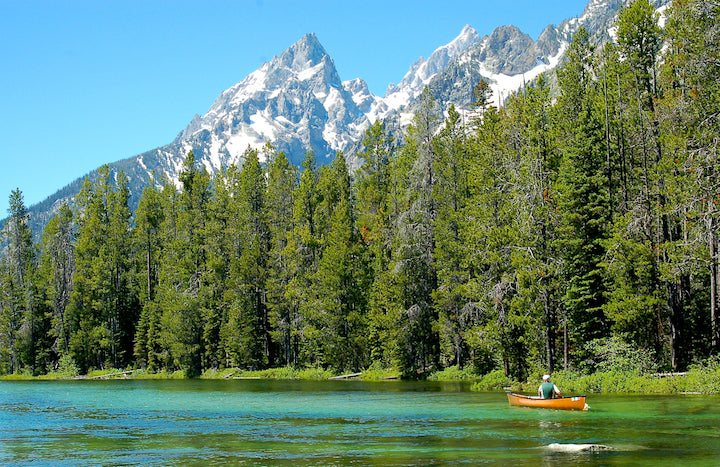
A solo canoeist on String Lake
3. Two Ocean and Emma Matilda Lakes (Away from the Crowds)
-
Overview—Want to escape the summer crowds? Head east of the main park road at Jackson Lake Junction to access these two.
-
Best For—Paddlers with their own light canoe, inflatable kayak/SUP or packraft.
-
Two Ocean Lake—is accessible from Pacific Creek Road (dirt road). Look for signs to the trailhead.
- Emma Matilda Lake—You’ll need to take a short trail portage off the road for this one. Pack light!
Of the lakes on this list, these two will be the least scenic due to the trees surrounding them. You may get glimpses of the mountains over the treetops, so be sure to look, though.

4. Bradley, Taggart and Phelps Lakes (South Park)
-
Overview—Located south of Jenny Lake, these three lakes require hiking in on park trails. Because of having to pack everything in, your group will likely to have the lake(s) to yourself!
- Best For—Backcountry packrafters or others who have ultra-light inflatables and lightweight, breakdown paddles.
5. Paddling the Snake River
-
Overview—The Snake is the only river in the park open to watercraft. It flows north to south through the entire length of the park.
-
Fun Fact—Jackson Lake is a reservoir created from the Snake River by the Jackson Lake Dam.
-
Beginners—Beginning paddlers should take the 5-mile section between Jackson Lake Dam and the Pacific Creek launch (which includes the popular and very scenic Oxbow Bend section).
-
Experienced paddlers with good navigation skills can take either of the two 10-mile intermediate routes. One is on the north end of the park, the other between the Pacific Creek launch and Deadmans Bar (that sounds rather ominous, doesn’t it?).
- Advanced Paddlers can consider the section south of Deadmans Bar, which is the most challenging, especially in high water.
The National Park Service provides this very helpful page about taking a paddle trip down the Snake. Read that carefully before making your plans.
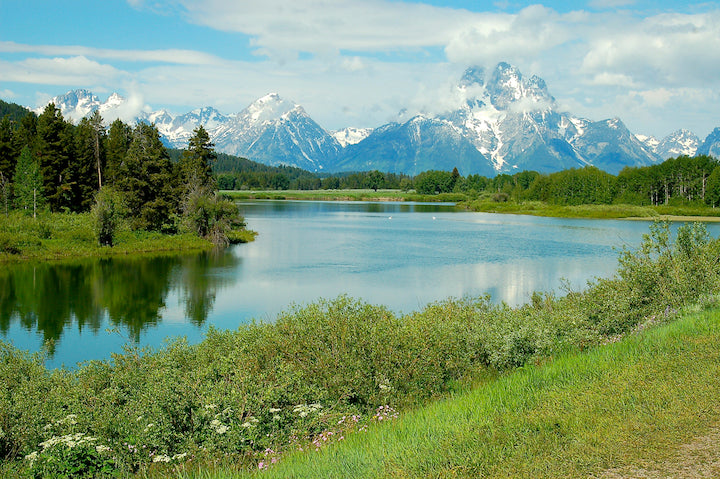
Oxbow Bend of the Snake River in Grand Teton National Park
What Permits Do You Need? Regulations for Teton Paddling?
Bringing your own canoe, kayak, paddleboard or packraft gives you the most freedom for where and when you paddle. But be sure you meet park and state requirements before you launch:
-
AIS inspection (Aquatic Invasive Species)—Wyoming law requires all watercraft be inspected for invasive species at an official AIS station before launching in state waters. Boats include canoes, kayaks and paddleboards 10 feet or longer.
-
Wyoming AIS Decal—You’ll also need to buy an AIS decal and place it on your boat. The exeptions are paddleboards (solid and inflatable) and non-motorized boats 10 feet and under.
- Grand Teton Boat Permit—These are needed for all watercraft each year for their use in the park. You need your Wyoming AIS Decal before getting this permit.
Get more information on both these permits here.
Canoe and Kayak Rentals in Grand Teton National Park
Canoe and kayak rentals within the park are operated by private permitted companies. Even if you have your own boat, you may prefer to rent instead, for any number of reasons.
Your options are:
-
Jenny Lake—Rent canoes or double kayaks from Jenny Lake Boating. At the time of this writing, prices are $35/hour or $140/day.
-
Jackson Lake/Colter Bay—Easy access to Colter Bay and Half Moon Bay with islands to explore and uninhibited mountain views across the lake. Rent a canoe, single kayak or tandem (double) kayak from Colter Bay Boat Rentals for $30-$45/hour with a 2-hour minimum.
-
Jackson Lake/Signal Mountain—Rent a kayak near the south end of Jackson Lake at Signal Mountain Lodge. At the time of this writing, rates are $29-$39 per hour and $120-140 per day. Rentals typically begin mid-June.
All of these rental places operate first-come, first-served.
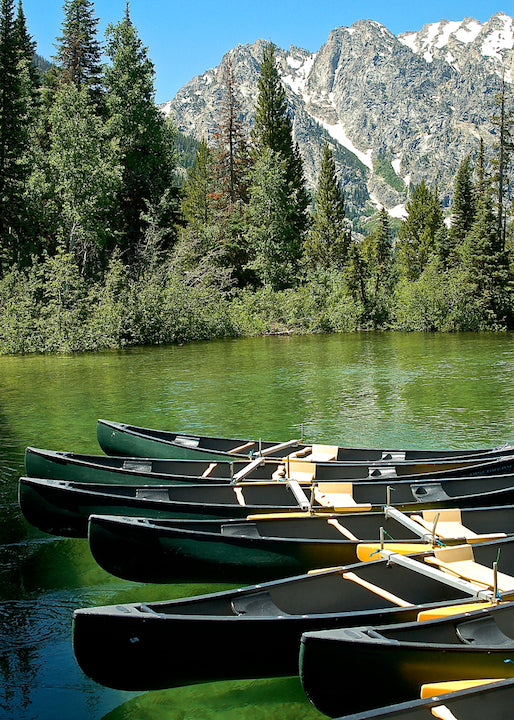
Rental canoes at Jenny Lake
Are There Rental Options Outside the Park?
Yes. If you want to spend a lot of time paddling within Grand Teton National Park, you’ll want to consider renting from one of these companies. They all offer daily and multi-day options as well as the accessory rentals like bear spray, dry bags and wetsuits.
All of these are located in the town of Jackson, south of the park:
-
Superior Paddlesports rents paddle boards and inflatable kayaks and delivers them to your paddle destination, including Jackson Lake, Jenny Lake or String Lake. What a wonderful convenience!
-
Rendezvous River Sports offers the biggest selection of rental boats in the area, offering canoes, kayaks, paddleboards and packrafts. Rent for one day or up to a week. Renezvous also offers kayak tours on Jackson Lake and the Snake River for 2-4 days. Prices for these tours include the gear and meals.
- Leisure Sports rents kayaks, canoes and paddleboards by the day or for several days.
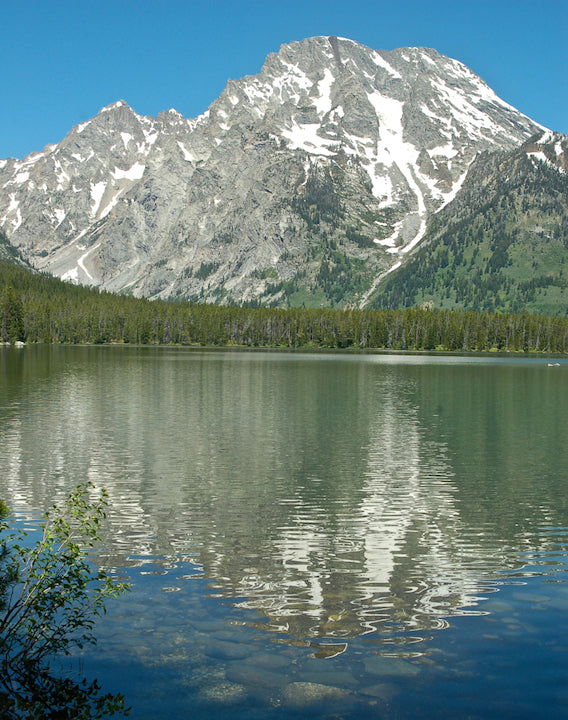
Leigh Lake with Mount Moran towering behind
Essential Safety Rules & Guidelines for Tetons Paddlers
-
Cold Water Hazard—Teton lakes are glacier-fed and stay extremely cold year-round, making hypothermia a very real risk. Always wear a properly fitted PFD (life jacket). SUP paddlers and beginner paddlers should stay close to shore or consider wearing a wetsuit.
-
Wind and Mountain Weather—Calm morning conditions can quickly turn into afternoon chop, high winds or sudden thunderstorms. Always check local forecasts before setting out and plan to launch early in the day. Keep an eye out for threatening clouds that may come over the mountains.
-
Bear Country Rules—You are in active grizzly and black bear territory. Never leave food, trash or scented items unattended in your boat or on shore. Carry bear spray in an easily accessible location, even while on the water near shore.
- Leave Your Pets at Home—All US national parks have strict rules about pets, Grand Teton National Park included. They’re not allowed on park trails, in the backcountry, at swimming beaches or in boats except on Jackson Lake. And you’ll need your own boat even there, as the rental companies don’t allow pets in their boats.

When Is the Best Time to Visit?
Grand Teton National Park is open to visitors year-round. But your best paddling time is June through September. The smaller alpine lakes may still have ice on them well into June.
-
July and August—Offer the warmest weather and longest days, but are also peak season with the largest crowds.
-
June and September—Provide quieter waters. September will see fall colors peeking out in the aspen. Water and air temperatures will be significantly cooler.
- Daily Timing Tips—Parking lots at popular launches like Jenny and String Lakes typically fill up by mid-morning, even in June and September. Plan to arrive early to get a good spot along with better chances of paddling alongside beautiful mountain reflections on the water.
People travel from all over the world to see the Grand Tetons. You won’t regret adding it to your list of must-see places. When you do, consider paddling at least one of its beautiful lakes for an unforgettable experience.
All photos courtesy of Sharon Brodin
(This was first published in 2017 and has been updated)