
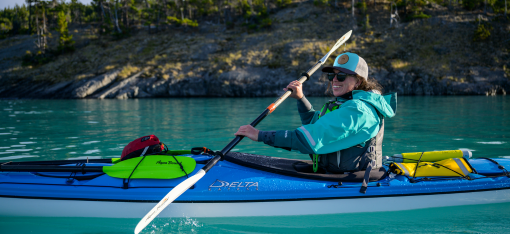
High-Angle vs. Low-Angle Kayak Paddles: What's the Difference?
8-minute read
If you’re new to kayaking, you might think “a paddle is a paddle.” But before long, you’ll learn there’s a big difference between the types of kayak paddles available. One of the major choices you’ll make is whether you want a high-angle or low-angle kayak paddle.

There’s a big difference between low-angle (on the left) and high-angle (on the right) kayak paddle blades
The difference comes down to your paddling style. High-angle paddling uses a more upright, powerful stroke. Low-angle paddling uses a more relaxed, horizontal stroke. The two styles use different blade shapes to match the way they move through the water.
So which one is right for you?
High-Angle vs. Low-Angle Kayak Paddles at a Glance
| HIGH-ANGLE KAYAK PADDLE | LOW-ANGLE KAYAK PADDLE | |
| Paddling Style | More vertical and powerful | More horizontal and relaxed |
| Blade Shape | Shorter and wider | Longer and narrower |
| Stroke | Aggressive, athletic, fast cadence | Relaxed, efficient, steady |
| Best For | Speed, power, maneuverability | Efficiency, comfort, distance |
| Common Uses | Whitewater, surf, packrafting, loaded boats | Recreation, touring, flatwater |
| Ideal For | Maximum power per stroke | Long days on the water |
The right choice isn't necessarily about which paddle is “better.” It’s about which paddle matches how you paddle and where you use your kayak.
What Is a High-Angle Kayak Paddle?
A high-angle kayak stroke is relatively vertical. Your upper hand goes higher and the paddle shaft stays more upright as the blade enters the water. This creates a powerful, athletic stroke that moves a lot of water.
High-angle kayak blades are designed to match this style. They’re shorter and wider than low-angle blades, giving them more surface area to catch and hold the water. This makes them well suited to paddlers who want power, quick acceleration and responsive handling.
High-angle paddles are best for kayakers who:
- Love a powerful, aggressive paddling stroke
- Paddle at a fast cadence
- Haul a lot of gear (multi-day trippers, kayak anglers)
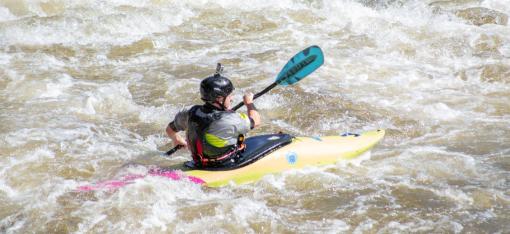
- Love whitewater kayaking or packrafting
- Enjoy kayak surfing and rock gardening
- Prefer a larger blade with more bite
High-angle paddling isn't limited to expert kayakers. Recreational paddlers can use a high-angle paddle, too, especially if they naturally paddle with a more upright, powerful stroke.

Aqua Bound's Whiskey is our high-angle performance kayak paddle (photo courtesy of Nick Ray)
What Is a Low-Angle Kayak Paddle?
A low-angle kayak stroke is more horizontal and relaxed. The paddle stays lower as you move it through the water. This style creates an efficient stroke that’s comfortable to maintain over several hours or even days.
Low-angle kayak blades are designed to match this style. They’re longer and narrower than high-angle blades, allowing you to pull the blade through the water smoothly without needing as much force with each stroke.
Low-angle paddles are well suited to kayakers who:
- Prefer a relaxed paddling style
- Spend many hours or days in a row on the water
- Enjoy recreational kayaking on lakes and slow-moving rivers
- Love touring or sea kayaking
- Want an efficient stroke that’s easier to maintain over long distances
- Prefer to minimize fatigue during extended paddling
Low-angle paddling is one of the most common styles for recreational and touring kayaking. It’s a great choice when the goal is to enjoy the journey rather than maximize speed or power with every stroke.

Low-angle kayak paddle blades suit sea kayakers who love long days on the water
What's the Difference Between High-Angle and Low-Angle Paddles?
The biggest difference you’ll notice is the blade shape.
High-angle blades are shorter and wider. They are designed to catch more water and deliver power with a more vertical stroke.
Low-angle blades are longer and narrower. They are designed to move efficiently through the water with a more horizontal stroke.
Your paddling style is the biggest factor when choosing between the two. Aqua Bound’s kayak paddle sizing guide also recommends considering your paddling pace and stroke angle when determining paddle length.
High-Angle Paddling
Think power, speed and maneuverability.
A high-angle paddle is a good fit if you naturally take a more upright stroke and want to accelerate quickly, maneuver aggressively or move a heavily-loaded kayak.
Low-Angle Paddling
Think efficiency, comfort and distance.
A low-angle paddle is a good fit if you prefer a relaxed stroke and want to cover distance comfortably or spend several hours on the water.
Which Kayak Paddle Should I Choose?
Still not sure? Think about how you actually paddle, not necessarily how you think you should paddle.
Choose a high-angle paddle if you:
- Paddle aggressively or at a fast cadence
- Want more power from each stroke
- Paddle whitewater or surf
- Packraft
- Frequently paddle a heavily-loaded fishing or touring kayak
- Want a highly responsive paddle for quick maneuvering

Choose a low-angle paddle if you:
- Mostly paddle recreationally
- Spend long days on lakes, rivers or the ocean
- Enjoy touring or sea kayaking
- Prefer a relaxed, cruising pace
- Want to minimize fatigue over long distances
- Value efficiency and comfort over maximum power
And remember: your paddle's length matters, too. Your height and the width of your kayak are primary factors when determining paddle length, while your paddling style can also affect the size you need.
Aqua Bound recommends considering a slightly longer paddle for a true low-angle stroke and a slightly shorter paddle for a true high-angle stroke when other sizing factors also point in that direction.
Check out Aqua Bound's Kayak Paddle Sizing Guide
Aqua Bound’s High-Angle Kayak Paddles
Aqua Bound offers high-angle paddles for a wide range of paddling styles and conditions.
Our Whiskey is a high-performance option for paddlers who want the lightest-weight, powerful paddle. The Manta Ray family offers high-angle options at a range of price points, while the Aerial and Shred families are designed for demanding whitewater and packrafting environments.
Want to learn more about the different high-angle options?
Explore Aqua Bound's High-Angle Kayak Paddles.

(photo courtesy of @blazin_paddles)
Aqua Bound’s Low-Angle Kayak Paddles
If you prefer relaxed paddling, touring or long days on flatwater, Aqua Bound has a range of low-angle paddles to choose from.
The Tango family offers premium low-angle paddles designed for paddlers who value lightweight performance on long trips. The Sting Ray family offers low-angle options at a range of price points, with carbon, hybrid a fiberglass models. Aqua Bound’s newer Tetra is our lightest, top-performing low-angle kayak paddle.
Explore Aqua Bound's Low-Angle Kayak Paddles.
Frequently Asked Questions About High-Angle and Low-Angle Kayak Paddles
What's the difference between a high-angle and low-angle kayak paddle?
The main difference is the paddling style and corresponding blade shape. High-angle paddles have shorter, wider blades designed for a more vertical, powerful stroke. Low-angle paddles have longer, narrower blades designed for a more horizontal, efficient stroke.
Is a high-angle or low-angle paddle better for recreational kayaking?
Either can work, depending on how you paddle. A low-angle paddle is often a good fit for relaxed recreational kayaking, especially when you spend several hours on the water. A high-angle paddle may be a better choice if you naturally use a more upright, powerful stroke.
Is a high-angle paddle faster?
A high-angle paddle helps a paddler generate more power and accelerate more quickly because its wider blade is designed to move more water with each stroke. But speed also depends on your paddling technique, cadence, kayak and other factors.
Are low-angle kayak paddles easier to use?
Low-angle paddles are designed for an efficient, relaxed stroke. This makes it easier to paddle over long periods. Their longer, narrower blades move through the water with less resistance, which can help reduce fatigue during extended paddling.
What type of kayak paddle is best for kayak fishing?
Anglers who regularly paddle a heavily-loaded fishing kayak usually prefer a high-angle paddle.
What type of paddle is best for touring?
Low-angle paddles are a popular choice for relaxed touring and long days on the water because their blade shape is designed for efficient, comfortable strokes. But touring paddlers who use a faster cadence and more aggressive stroke may like a high-angle paddle better.
Can I use a high-angle paddle for recreational kayaking?
Absolutely. The high-angle/low-angle distinction describes your paddling style—it’s not a rule about what type of kayak you own. If you naturally paddle with a more vertical, powerful stroke, a high-angle paddle will be a good choice for recreational kayaking.
How do I know whether I'm a high-angle or low-angle paddler?
Pay attention to your forward stroke. If the shaft stays relatively upright and your stroke is powerful and close to the kayak, you're likely a high-angle paddler. If the shaft stays lower and your stroke is more relaxed and horizontal, you're likely a low-angle paddler.
If you're still unsure, try both styles! It’s the best way to see which feels natural. See if you can find an on-water paddle demo hosted by a retailer or outfitter in your area. Or sign up for a kayak tour or two and try both styles.
Find the Right Paddle for You
Choosing between a high-angle and low-angle kayak paddle is really about finding the paddle that matches your paddling style, your kayak and the kind of adventures you enjoy.
Here's a helpful video from our friends at AQ Outdoors:
Or use our Paddle Finder to explore your options.
[This blog post was originally published in 2021 and is periodically updated.]
Still have questions? Our friendly Customer Service Team is ready to help! Contact them: 715-755-3405 • sales@aquabound.com
More for you...